
Pittsburg Previous Resident Sources
No single roll covers every Pittsburg household. The Crawford County parcel systems offer a present-day starting point, deeds carry ownership backward, and the historical collections fill in occupants who never held title. The strongest previous-residents search follows the same tract across eras, even when the street number changes.
| Source | Years It Covers | Where Held | What It Shows |
|---|---|---|---|
| Crawford deed index | 1870-1901 archival index; later records at county | State Archives and Register of Deeds | Grantors, grantees, instrument, volume/page, and tract |
| Pittsburg directories | 1900-1960, with documented gaps | PPL, NARA, and directory reels | Printed names and address associations |
| Kansas census material | 1860-1930 at PPL, excluding 1890 | PPL and KSHS | Household and street context |
| Plat and Sanborn maps | 1906 plat; Sanborn years 1897-1944 cited | PPL, KU, PSU, KSHS | Lot, block, footprint, use, and street context |
| Obituary and probate files | Series-specific, including probate 1867-1950 | PPL, county, and State Archives | Relationships, death dates, estates, and address clues |
For a recent transfer, start with the county parcel entry points and the Register of Deeds. For an early twentieth-century household, start with a directory year close to the target date, then test the census and deed trail. A nineteenth-century search usually depends on legal descriptions, county books, and archival indexes.
Pittsburg Deeds Before Online Search
The Kansas State Archives description of Crawford deed indexes documents grantor and grantee volumes for 1870 through 1901. An index entry can include time received, both parties, instrument type, volume and page, remarks, and a tract description. Those fields point to the recorded instrument; they are not the deed image itself.
The modern cutoff for Tapestry or Laredo was not published in the sources reviewed. When the online route stops, the Crawford County Register of Deeds counter in Girard is the fallback. The county describes Tapestry as pay-as-you-go and Laredo as subscription access. A researcher who does not know the tract or legal description should ask the counter how to bridge the current parcel to the older book.
The archival view below shows the official source used for Pittsburg previous-resident deed research.
The index should be logged as a finding aid. Copy the grantor and grantee spellings as printed, along with instrument type, volume, page, and tract. A deed may transfer only part of an interest, reserve an easement, or correct an earlier instrument. Read the linked document before calling the entry a complete change of ownership. The county also holds mortgages, plats, surveys, releases, liens, leases, and affidavits, so a name in the index may reflect a role other than buying or selling the home.
Open the Crawford historic deed-index description.
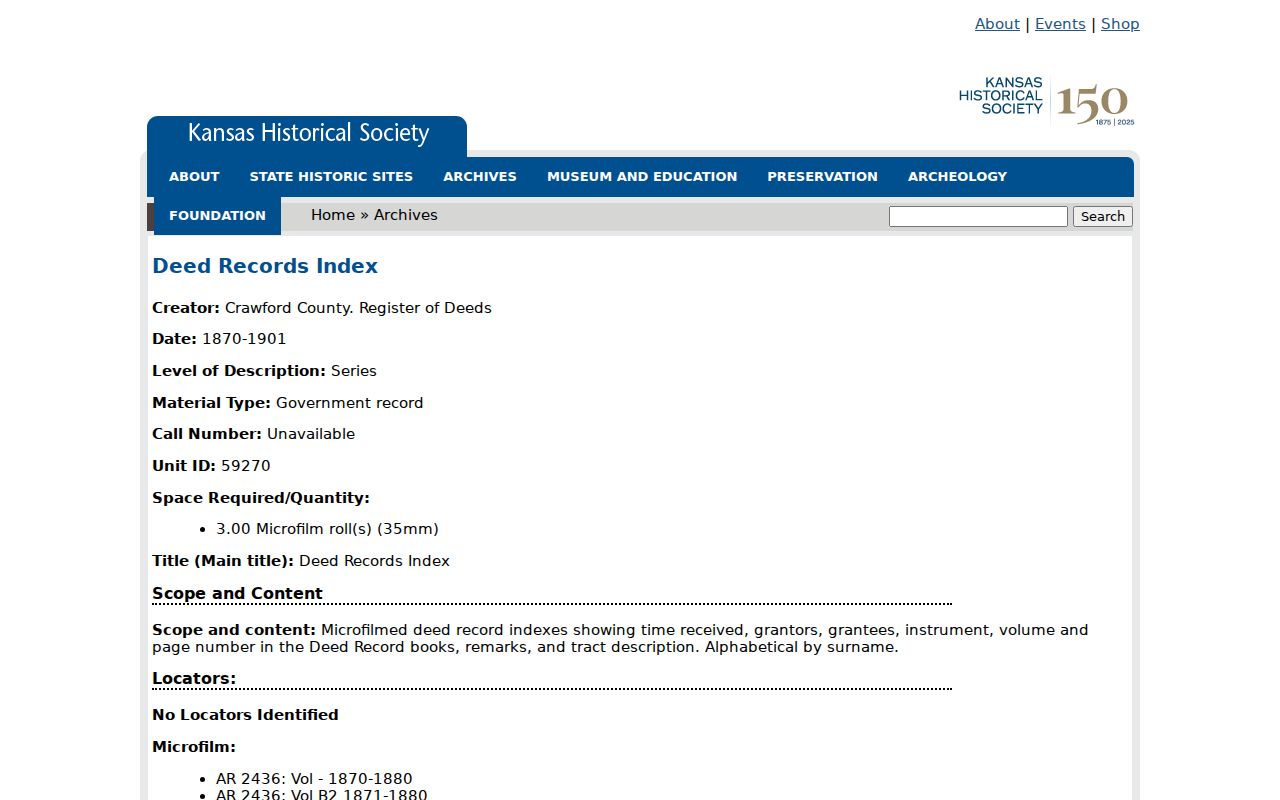
Its date span and field list make clear when an archival book-and-page search must replace a simple web query.
Trace Pittsburg Owners Backward
A deed chain follows the legal parcel, not just its mailing label. Begin with the current parcel card and write down the owner as shown, legal description, subdivision, lot and block, and any instrument reference. Then move from each purchase deed to the seller's earlier purchase.
- Find the current parcel through ORKA or CIC and save the retrieval date plus legal description.
- Locate the current owner's purchase instrument through the county deed route.
- Read the grantor, then search that seller as a grantee to locate the earlier purchase.
- Repeat while recording instrument numbers or volume/page references and tract wording.
- When the web index ends, take the last firm citation to the Girard counter or archival microfilm.
- Grantor / grantee
- The grantor gives or sells an interest; the grantee receives it.
- Chain of title
- The linked sequence of transfers affecting the same land.
- Legal description
- The lot, block, subdivision, survey, or boundary wording that identifies land despite a changed street number.
Pittsburg Maps Bridge Old Addresses
The library's 1906 plat map can connect a printed street address with a lot and block. Sanborn fire-insurance maps add dated building footprints, uses, and block layout. They do not name every resident, but they can show whether two address references describe the same structure or whether a building changed between directory years.
View KU Libraries' digitized 1905 Pittsburg Sanborn sheet.
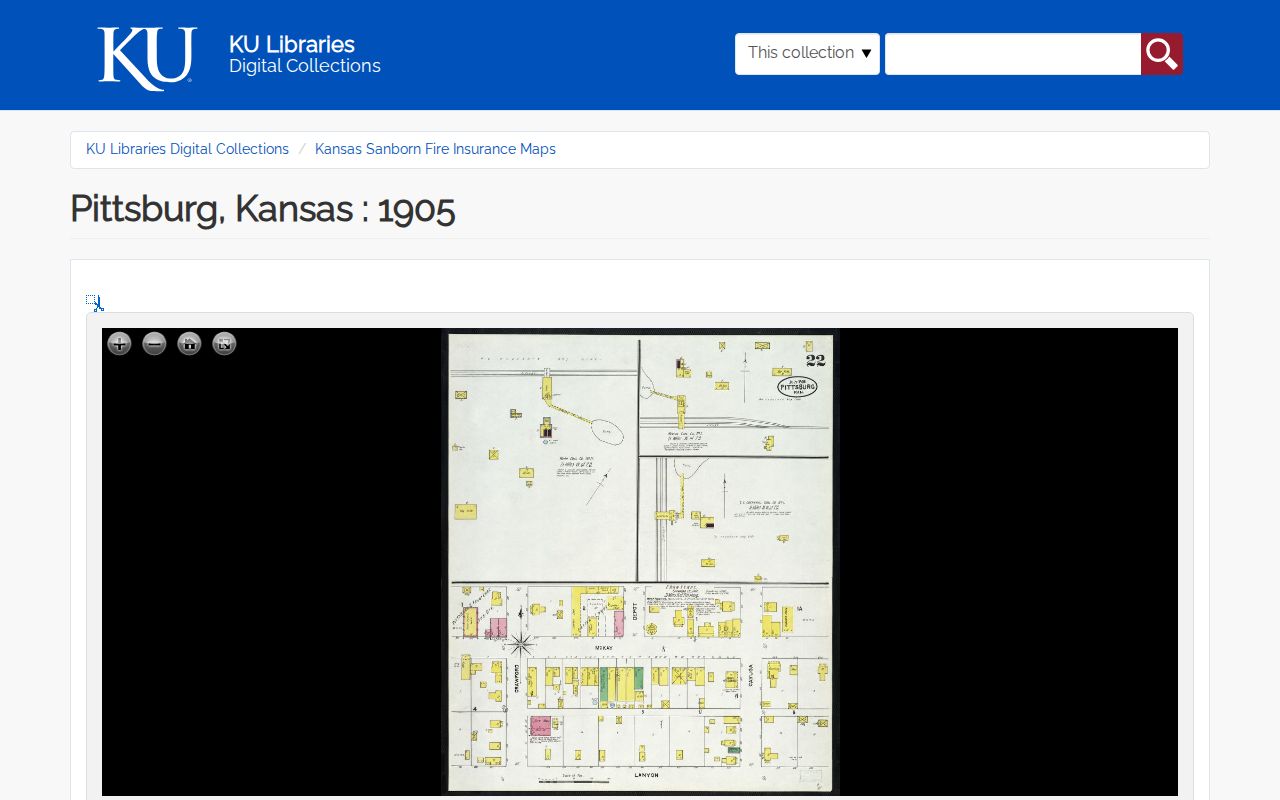
The sheet supplies a dated block view that can be compared with the deed's legal description and a directory citation.
Open Pittsburg State University's circa 1930 Sanborn map.
The PSU item is described as a revision of an April 1923 map before a later 1944 revision, so its repository date and edition note belong in the citation.
A map comparison works best when the researcher records the sheet number, block, street names, and visible footprint. Then compare those details with the 1906 plat and the deed's lot-and-block wording. A renamed road or changed number matters less when the same subdivision and lot remain stable. Pittsburg Building Safety is the city-side custodian for address assignments and permits, but no complete public historical permit index was found. A focused request should name the address, date range, and desired permit or address-assignment record.
Pittsburg Previous Residents in Archives
The State Archives Crawford County collection spans 1868 through 1952. Its described series include land, probate wills, marriage, naturalization, district-court divorce, and early birth and death material. These sources can separate people with the same name by spouse, estate, citizenship, or court date.
Review the Crawford archival collection description.
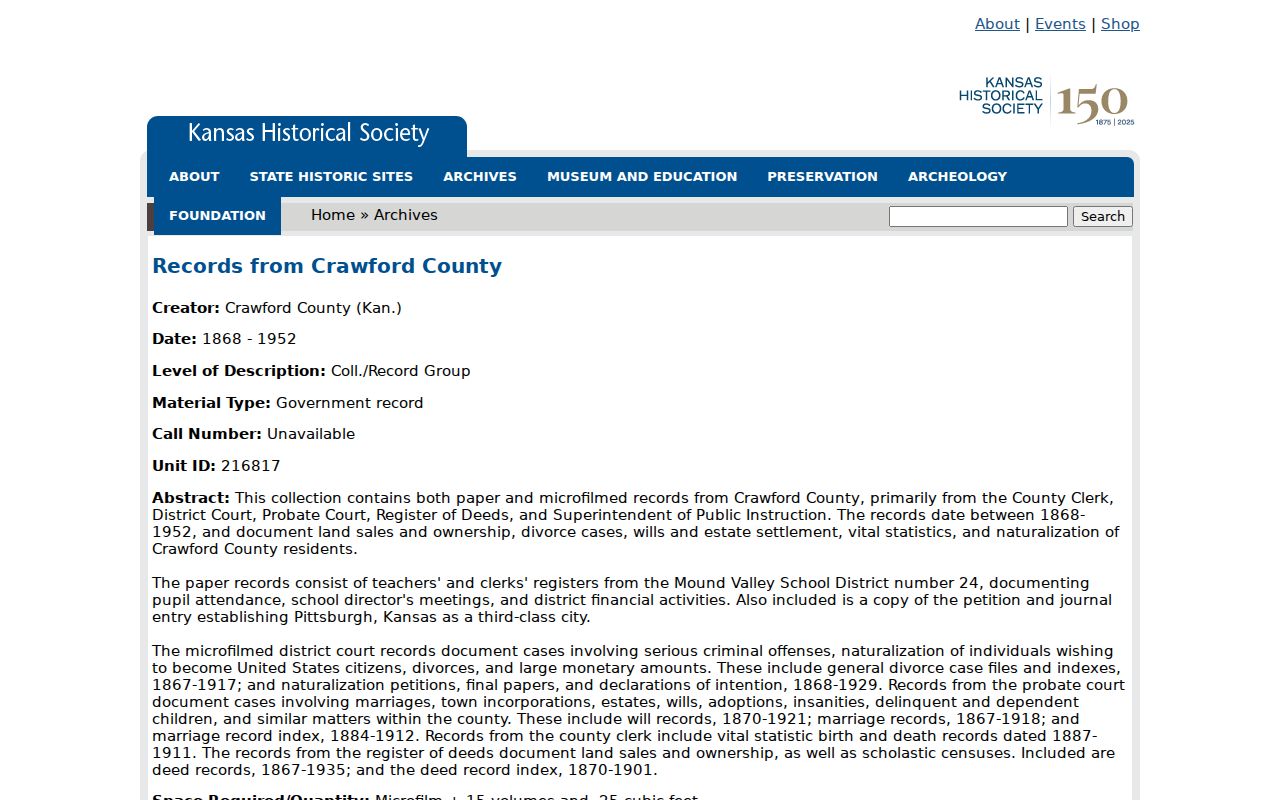
The collection page helps route a Pittsburg address search to a specific series instead of treating the archive as one broad name index.
Naturalization and probate are especially useful for same-name conflicts. Naturalization can supply a former name, origin, and date. A will or probate file may name relatives and land. Marriage and early birth or death ledgers add another dated tie, though an index remains only a lead. Current certified vital copies follow Kansas eligibility rules, while early local material may be available through county or archive channels. Keep restricted records out of a public research log.
Pittsburgh Is an Archive Clue
An official archival title uses “Pittsburgh” for the petition and journal that made the city third class. That older spelling is a useful catalog variant, not a reason to rewrite the modern city name. Search both spellings, preserve the title exactly in a citation, and keep Pittsburg as the location field.
This small difference can rescue a stalled previous-residents search. It also guards against merging records from another place merely because a search engine normalized the name.
Pittsburg Records Survived Office Moves
Crawford County's official courthouse history says the brick courthouse opened in 1890, later developed serious cracks, and was vacated in 1920. The present courthouse was dedicated in 1922. The source does not say a fire erased the land books.
That distinction matters. A missing online result should lead to the Register, State Archives, library, or another documented keeper, not to a claim that no record survives. Office movement is context for where the books are now.
Pittsburg Genealogy Request Details
The Crawford County Genealogical Society works on the second floor of Pittsburg Public Library. Its holdings join directories with cemetery files, probate, funeral-home records, maps, mining collections, and obituary cards. Published research is $10 per hour plus copies, while obituary copies are listed at $5.
Open the library genealogy request form.
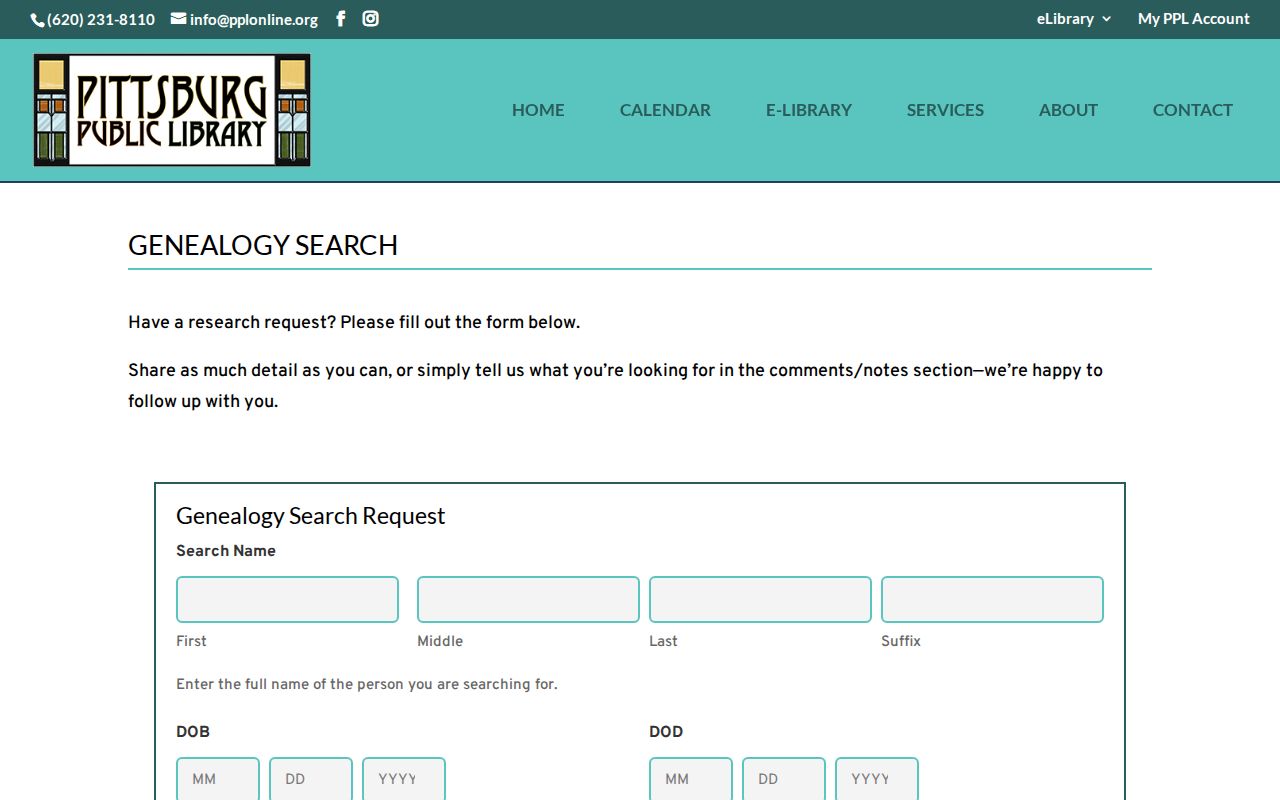
The form asks for names, dates, address, spouse, parents, and children. Providing the target address and year range helps volunteers distinguish same-name residents.
Ask the volunteer for the collection title and the card, page, or reel reference. The library lists census material from 1860 through 1930 except 1890, marriages from 1867 through 1937, naturalizations into the 1950s, and probate from 1867 through 1950. Its obituary card file begins in the 1970s, while Morning Sun obituaries cover 1975 through 2004. Those ranges help choose a request that the collection can actually answer.
Pittsburg Past Household Evidence
Ownership is only half the address story. Printed directories can associate a person or business with a street at publication time, while census schedules can show a household at a dated place. The Pittsburg runs span the early 1900s through 1960 with many documented missing years. The Pittsburg city directory collections provide the detailed year and reel map.
Use a simple flow: directory year, nearby census year, deed owner, obituary or probate, then map. Keep the publisher, reel, page, exact spelling, and address from each hit. An absent name may reflect a missing volume, a move, a name change, or a street change.
Obituary cards and the Morning Sun file can add relatives and dates. Probate can connect an estate to land. Neither should be treated as a current occupancy record. Each clue needs its own repository citation and one independent match.
The final timeline should separate ownership from occupancy. Give each Pittsburg previous resident a source date, record type, and level of confidence. If a directory names one person while the deed names another, preserve both facts. The difference may reflect a renter, family member, business listing, estate, or publication lag. It is evidence to investigate, not an error to smooth away.
Lawful use. Research Pittsburg previous residents for house history, genealogy, estates, or personal curiosity. Never use an address trail to track, intimidate, or harass a living person.